Baking is Faster & Less Mess with Metric Measurements & a Kitchen Scale
Learn why professional bakers prefer metric baking, how a kitchen scale delivers more accurate baking measurements than measuring cups, and how easy it is to convert cups to grams using ConverterTool.io.
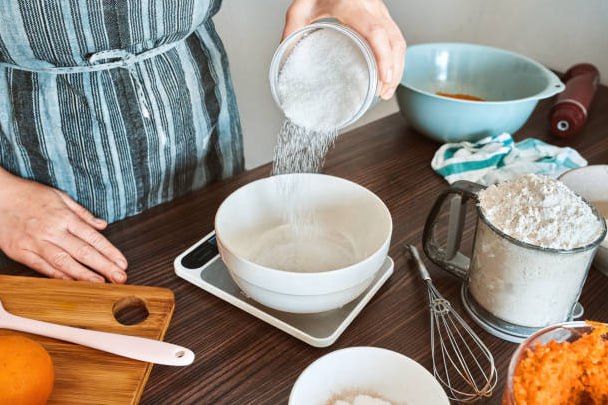
A kitchen scale makes metric baking simple - just pour until you reach the exact weight
There's a reason professional bakeries around the world consistently produce cookies with perfectly crisp edges, cakes with light, even crumbs, and bread with reliable texture every single day. It isn't because they have secret ingredients or expensive equipment. More often than not, it's because they rely on one simple principle: baking by weight instead of by volume.
If you've ever followed the same cookie recipe twice and ended up with completely different results, you're not imagining things. Small differences in how ingredients are measured can dramatically affect baked goods. A little too much flour can turn soft cookies into dry, cakey ones. A little too little flour can leave cookies flat and greasy. Bread may become dense, muffins may fail to rise, and cakes may lose their delicate texture.
That's why metric baking has become the standard in professional kitchens and in most countries around the world. Rather than measuring ingredients with cups and spoons, bakers use grams and a digital kitchen scale to ensure every recipe starts with exactly the right amount of each ingredient.
The good news is that making the switch isn't difficult. In fact, many home bakers find that using a kitchen scale for baking is actually faster, cleaner, and much less stressful than juggling measuring cups.
Why Baking Measurements Matter More Than You Think
Cooking is often forgiving. If a soup recipe calls for one onion and you use one and a half, the finished dish will probably still taste great. If you add a little extra garlic or slightly less salt, you can adjust as you go.
Baking doesn't work that way.
Baking is built on chemistry. Ingredients react with one another in carefully balanced proportions:
- Flour provides structure
- Butter adds richness
- Sugar contributes sweetness while also affecting moisture and browning
- Eggs bind ingredients together
- Baking powder and baking soda create lift
When one ingredient changes—even by a relatively small amount—it changes the chemistry of the recipe. That's why accurate baking measurements become incredibly important.
The Problem with Measuring Cups
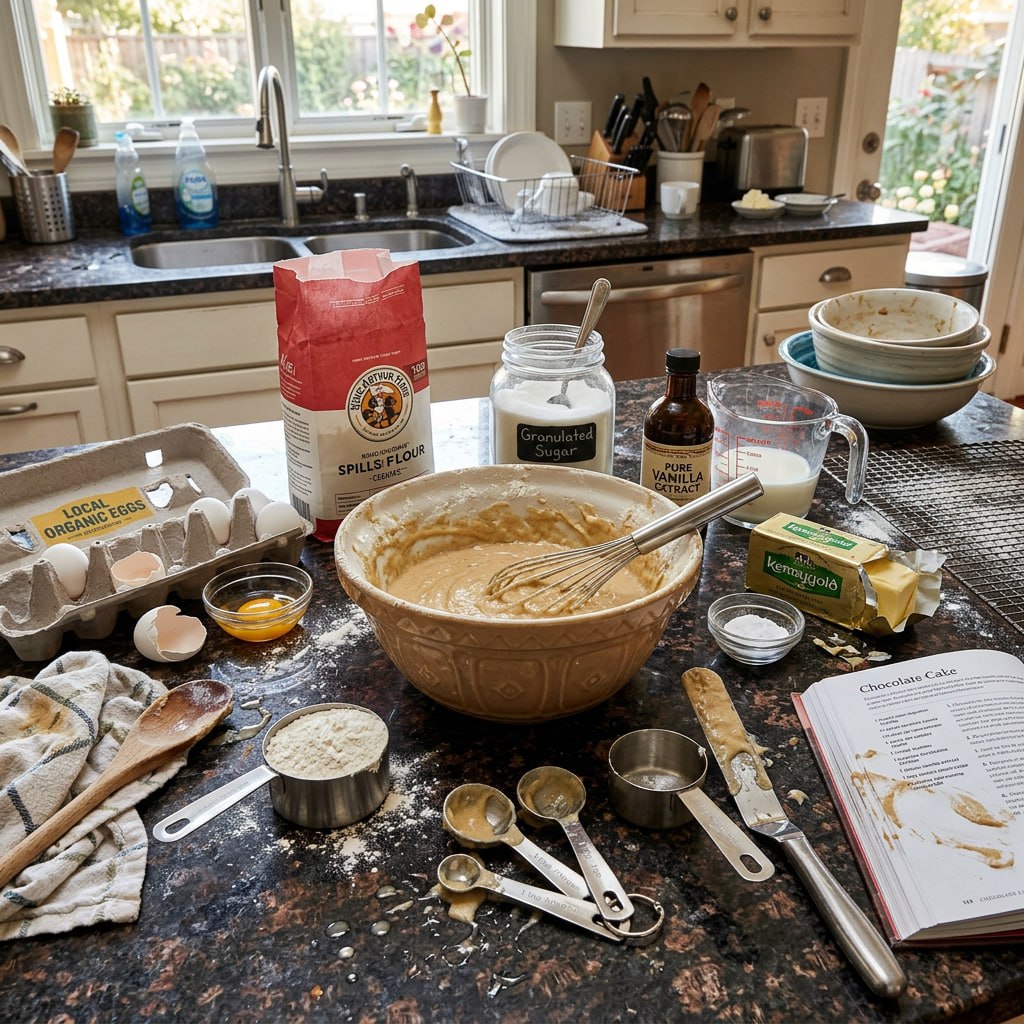
More tools = more cleanup! Measuring cups, spoons, multiple bowls...
Measuring cups have been part of American kitchens for generations, and millions of recipes still rely on them. They're familiar, inexpensive, and easy to find.
The problem isn't that measuring cups don't work. The problem is that they're surprisingly inconsistent.
Imagine asking five different people to measure one cup of flour:
- One person scoops directly into the flour bag
- Another spoons flour gently into the cup before leveling it
- Someone else shakes the cup slightly to settle the flour
- Another packs it tightly without realizing it
Although each person believes they've measured "one cup," the actual weight may vary by 20 to 40 grams—or even more.
That difference might seem insignificant until you realize that many cookie recipes contain only 250 to 300 grams of flour in total. If one baker accidentally adds an extra 30 grams of flour, they've increased the flour content by more than 10 percent. That single measurement error can completely change the finished cookies.
Kitchen Scale vs Measuring Cups: Which Is More Accurate?
When comparing kitchen scale vs measuring cups, accuracy isn't really a close contest.
A digital kitchen scale measures actual mass. If a recipe calls for 300 grams of flour, every baker who measures 300 grams has exactly the same amount. There's no guessing, no fluffing, no packing, no leveling. Just the precise quantity the recipe developer intended.
This consistency is one of the biggest reasons baking schools, culinary institutes, and professional bakeries teach baking by weight instead of by volume. It allows recipes to be repeated over and over with remarkably consistent results.
Why Use Grams in Baking?
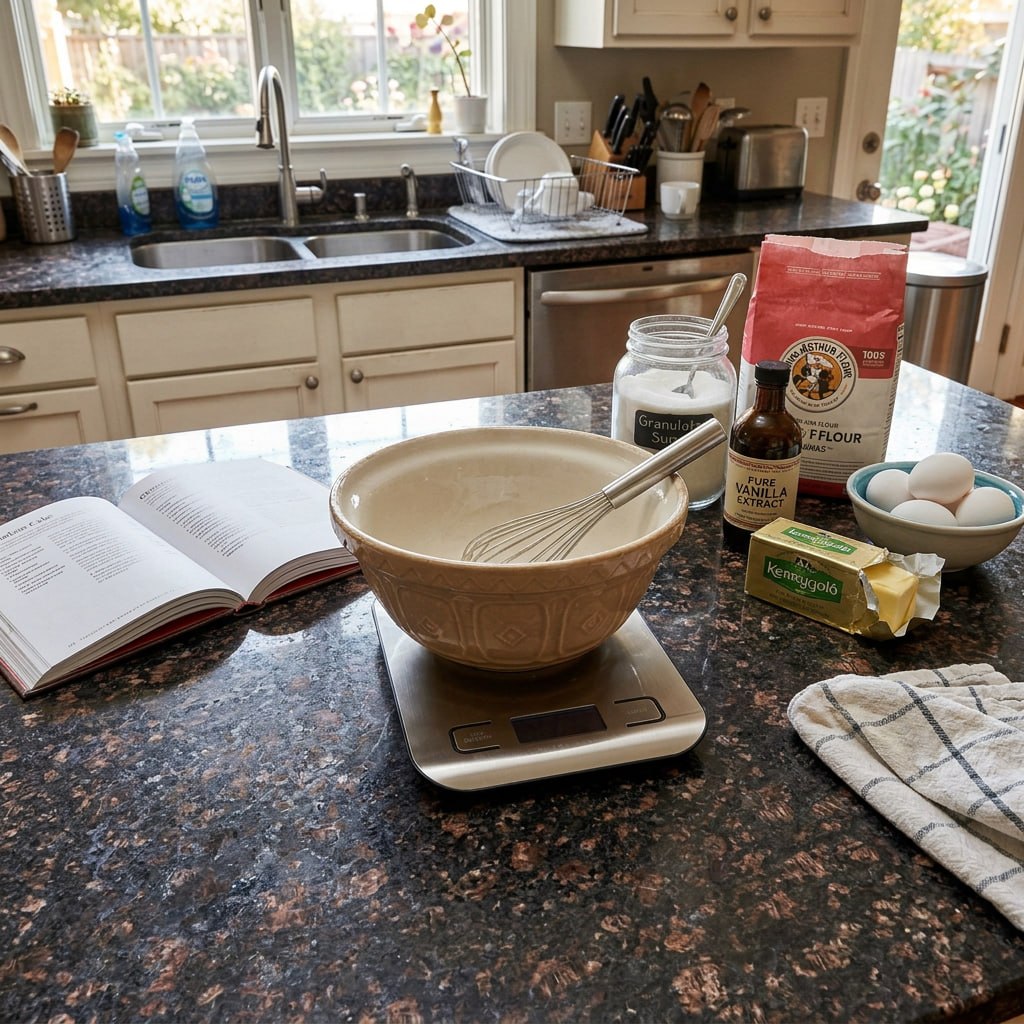
Weighed baking = just 1 bowl + 1 scale = way less cleanup!
For many home bakers, the biggest mental hurdle isn't buying a kitchen scale—it's getting used to seeing recipes written in grams instead of cups.
At first glance, grams may seem more technical or complicated. In reality, they're often much easier to use.
Think about some of the fractions found in traditional baking recipes: ⅓ cup, ⅔ cup, ¾ cup, 1½ tablespoons, ⅜ teaspoon. These measurements require different measuring cups and spoons, and they're easy to misread or accidentally skip.
With metric baking, there's no need to remember fractions or switch between multiple measuring tools. You simply watch the number on the scale increase.
Converting Cups to Grams
Here's a quick reference for common baking ingredients:
- 1 cup all-purpose flour = approximately 125-130 grams
- 1 cup sugar = approximately 200 grams
- 1 cup butter = approximately 227 grams
- 1 cup powdered sugar = approximately 120 grams
- 1 cup cocoa powder = approximately 85-100 grams
But here's the thing: different ingredients have different densities, so "one cup" doesn't always equal the same weight. That's why weighing is so much more reliable!
Final Thoughts
Switching to metric baking might feel like a big change at first. But once you try it, you'll wonder how you ever baked without a kitchen scale.
Your recipes will be more consistent. Your cleanup will be faster. And most importantly, your baked goods will turn out perfectly every time.
So grab a digital kitchen scale, find a recipe written in grams (or convert your favorite recipe!), and discover why professional bakers everywhere swear by baking by weight.
Happy baking! 🧁
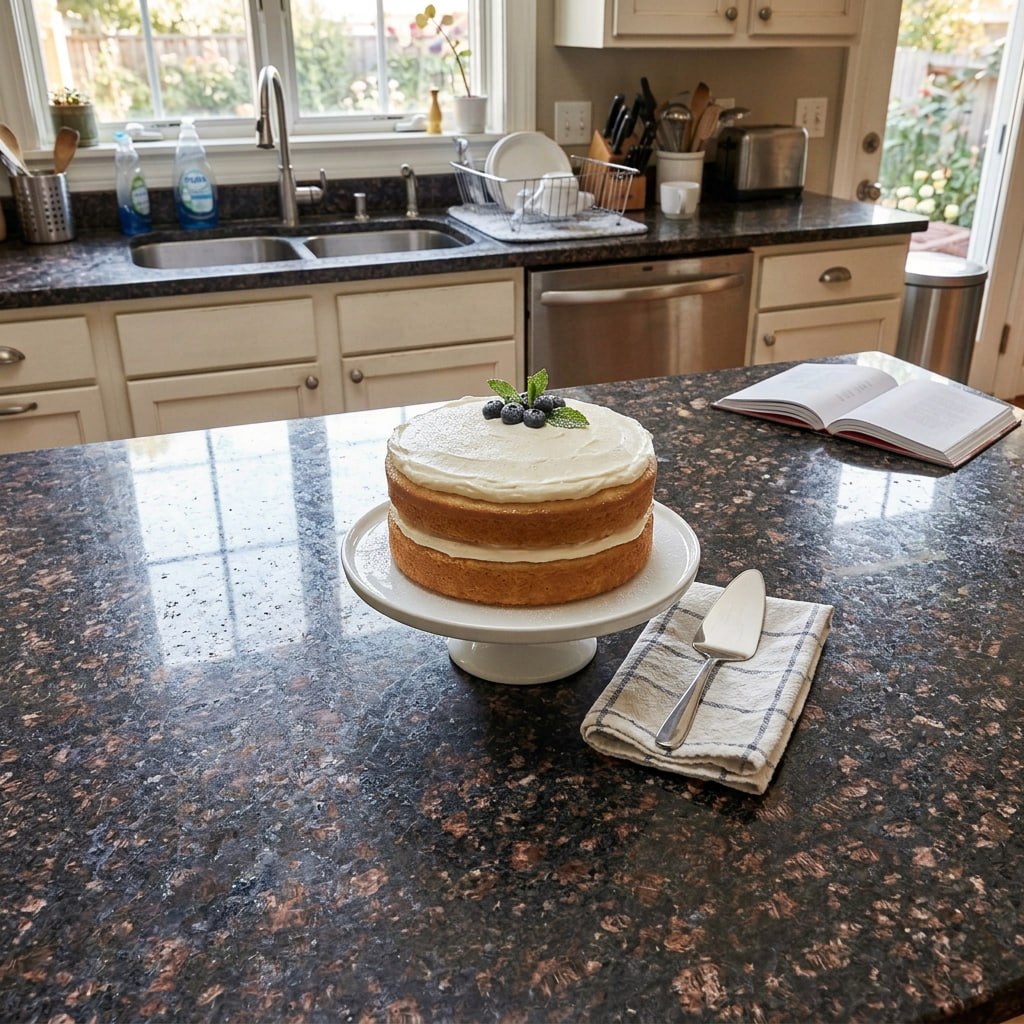
The reward: Perfect cake, no measuring cup mess!
Try our Weight Converter to convert between grams, ounces, pounds, and more!